An Ambitious Defense Spending Plan with Reliance on Reconciliation Funds
The Department of Defense officially announced its fiscal year 2026 budget request today, proposing a record-high $961.6 billion. However, details on how to sustain such levels in future years remain unclear. The budget emphasizes strengthened homeland security, countering Chinese influence in the Indo-Pacific, revitalizing the defense industrial base, and responsible fiscal management.
Relying on Congressional Reconciliation for Major Funding
While the Trump administration has pushed the goal of reaching a historic “$1 trillion” defense budget, it depends heavily on Congress passing a reconciliation bill containing $150 billion for national security—of which the Pentagon aims to secure $113.3 billion in FY26. The Pentagon has not disclosed contingency plans if Congress fails to approve this supplemental funding.
A senior defense official expressed optimism about the reconciliation process, saying, “We’re very excited to see the Senate’s progress and hopeful about the House collaboration,” but emphasized that the department expects the budget to go through the normal congressional process. Currently, there is no formal five-year spending plan, especially for key initiatives like shipbuilding or the Golden Dome program, raising questions about long-term fiscal planning.
Despite uncertainties, the official suggested that unless the President’s tone changes, the department aims to sustain a trillion-dollar defense budget into 2027 and beyond.
Budget Distribution and Priorities
Because comprehensive justification documents are pending, the following allocations are based on available summaries:
- Military Personnel: $184 billion (including $689 million from reconciliation)
- Procurement: $205 billion (with $52 billion from reconciliation)
- Research and Development: $1.2 billion (all from base funding)
- Operation and Maintenance: $107 billion (including $9 billion reconciliation)
- Military Construction: $19.8 billion (with $842 million reconciliation)
Among the services, allocations include $197.4 billion for the Army, $292.2 billion for the Navy, $301.1 billion for the Air Force and Space Force, and $170.9 billion for defense-wide activities.
Shifts in Weapons Programs and Force Structure
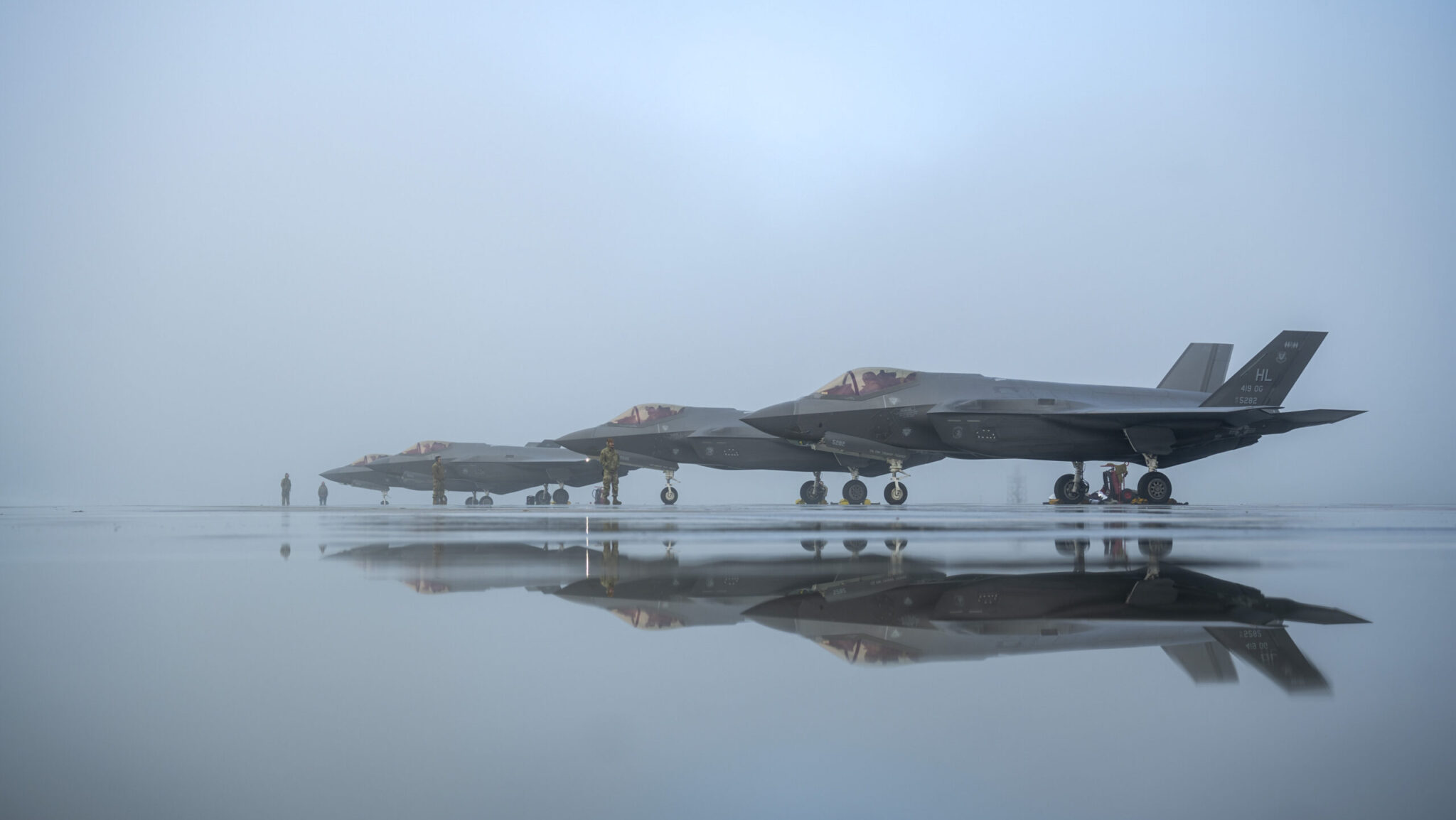
The FY26 budget proposes a smaller F-35 procurement, with the Air Force cutting its F-35A buy to 24 jets, totaling 47 Joint Strike Fighters for the Department of Defense. Additionally, the budget depends heavily on reconciliation funds to advance shipbuilding, covering 16 of the 19 requested vessels, including a second Virginia-class submarine and two Arleigh Burke-class destroyers.
The decision on whether to proceed with the Navy’s next-generation strike fighter, F/A-XX, remains pending; however, $74 million is allocated to finish its design phase. The Pentagon is prioritizing the Air Force’s F-47 program with a $3.4 billion request, citing industrial base capacity and presidential priorities as reasons for focusing efforts there first.
Army Cancellations and Investment in Autonomy
Several Army programs face cancellation, including the M10 Booker armored vehicle, Robotic Combat Vehicle, Improved Turbine Engine, Joint Light Tactical Vehicle procurement, and Grey Eagle drones. The department is allocating $13.4 billion toward autonomy across services, with dedicated funds for unmanned aerial, ground, water, and underwater systems, as well as autonomy software, signaling a significant strategic push into unmanned capabilities.
In Summary
While the FY26 budget sets an ambitious spending level, the lack of firm long-term plans and heavy dependence on congressional reconciliation highlight ongoing uncertainties in U.S. defense budgeting, even as the department prioritizes modernization, technology programs, and force readiness.