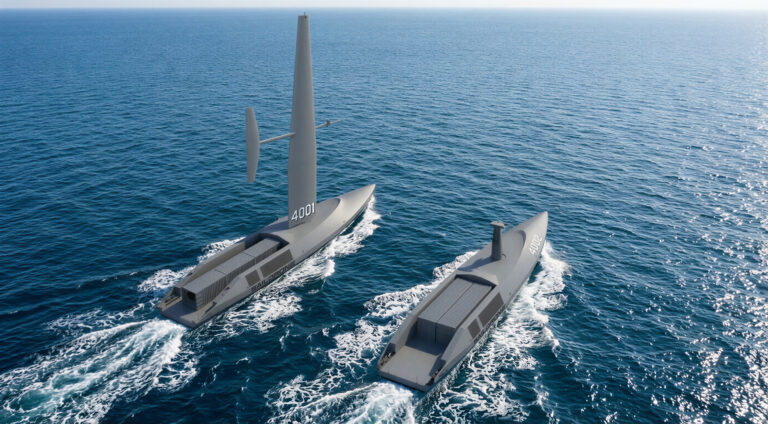
A major legal battle is shaking the maritime technology industry after startup Blue Water Autonomy and manufacturer Saildrone filed lawsuits against the US Navy. At the heart of the dispute is their exclusion from the new Medium Unmanned Surface Vessel (MUSV) marketplace, a strategic initiative valued at billions of dollars.
Allegations of procedural violations in the autonomous fleet selection
The dissatisfaction of the two companies stems from how the US Navy managed the selection for the MUSV marketplace, launched in March this year. In the filed complaints, the firms claim their proposals met all requested technical criteria but were arbitrarily eliminated. Blue Water Autonomy went even further, asking the court to effectively freeze the program, which could block ongoing testing and the awarding of future contracts. The companies accuse naval authorities of failing to adhere to their own selection guidelines and reaching „conclusions” that contradict official requirements.
Massive investments at risk following Pentagon decisions
The situation is particularly tense for Blue Water Autonomy, as the company had already been selected for a previous program, MASC, before it was abruptly canceled and replaced by the current MUSV structure. Relying on the Navy’s promises to utilize commercial innovations, the startup and high-tier investors, such as Google Ventures, injected significant funds into developing the technology. Company representatives argue that the Navy excluded them prematurely, without providing a chance to demonstrate their vessels’ capabilities during sea trials.
The fight for technological supremacy and the 2 billion dollar budget
On the other hand, Saildrone asserts that its Spectre design received international certification as early as 2025 and that the firm had already begun purchasing critical components to meet 2027 delivery deadlines. While not seeking to halt the entire program, Saildrone is demanding a fair reevaluation, pointing out that other firms were accepted into the competition despite having more significant technical deficiencies. The financial stakes are enormous: the program benefits from $2.1 billion in funding approved last year, and selected firms will receive $15 million grants and access to mass production contracts. While the Navy refuses to comment on pending litigation, seven competing firms are already preparing for the final at-sea testing phase.