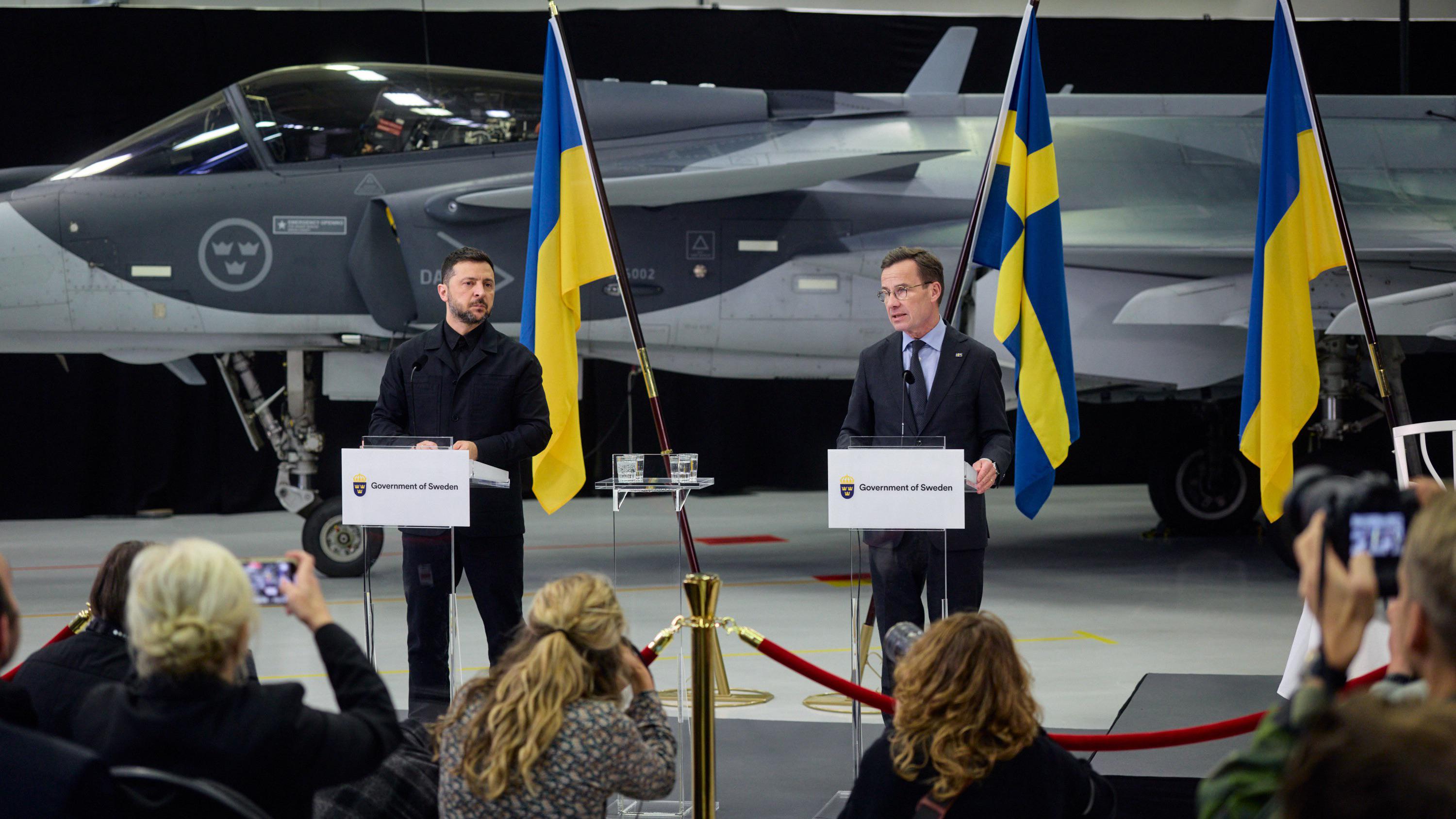
As Western peace talks for a ceasefire in the Russo-Ukraine conflict advance, strategic attention is shifting towards configuring the reality after the cessation of hostilities. The crucial question is not just what this new phase will look like, but how it can be sustainable, given the bitter lessons of recent years. An uncomfortable truth emerges: any future ceasefire deal will not halt Russia’s coercive strategy; it will merely shift its tactics. Moscow has repeatedly demonstrated that it views diplomatic pauses not as a promise of peace, but as an opportunity to rearm, reorient, and resume pressure through other means.
The Grand Post-Ceasefire Challenge: An Imperative „Air Dome”
Thus, the central question for 2026 and beyond is not simply how to help Ukraine defend itself today, but how to construct a robust airpower architecture capable of deterring Russia long-term. Such a protective „air dome” for Ukraine will need to function regardless of the presence of peacekeeping forces or a possible demilitarized zone. Lessons from past experiences with „air policing” and „no-fly zones” in the Peace Agreement on Bosnia-Herzegovina are crucial: air security guarantees for Ukraine cannot be slow to decide, ambiguous, or toothless.
An effective approach requires a credible operational design, conceived now, so that it is not muddied by Russian desires or risk-averse attitudes in Western capitals. The optimal way to make peace durable is to build an Allied Air Command for Ukraine (AAC-U) with dedicated aircraft, resources, staff, and planners. Such a plan must be integrated, persistent, rapid in response, and tailored to allow flexible rules of engagement to properly respond to the host of coercive and ambiguous tools Russia will continue to employ.
Three Pillars for the Success of the Allied Air Command
For the AAC-U to be successful, three fundamental elements are required:
- Shifting the paradigm: Moving the logic of airpower guarantees to the actual architecture needed to implement them.
- Defining the structure: Exactly outlining what the AAC-U should look like.
- Justifying viability: Explaining why these measures represent the most viable deterrent framework, given the post-2025 balance of forces.
The Rationale Behind an Effective Allied Air Command
The starting point is recognizing the character of the post-ceasefire battlespace. By 2026, Russia will likely lean even more heavily on stand-off strikes, long-range cruise missiles, drones, electronic warfare saturation, and the irregular probing of airspace over Ukraine and NATO member states. These tactics will accelerate, not diminish, after any settlement. Russia will test response times, allied resolve, and rules of engagement; if Moscow assumes that crossing a border with strike aircraft and drones will generate debate rather than a strong response, they will exploit this strategic gap.
Accordingly, an effective AAC-U will require strong allied command and control. At this point, security assistance efforts are impressive but remain fragmented. Ukraine receives F-16s from several European countries, Patriot batteries from the United States and Germany, NASAMS and IRIS-T systems from others, and training from a variety of Western air forces. However, there is no single structure unifying how these assets communicate, cue, prioritize, or respond.
Deterrence demands coherence, not a collection of stand-alone contributions. Hence the AAC-U: a mission-tailored multinational headquarters integrating Ukrainian air forces, allied aircraft operating in or near Ukrainian airspace, ground-based air defense systems, intelligence, surveillance, and reconnaissance (ISR) platforms, and a shared — but rapid — decision authority for identifying hostile acts and executing rapid responses.
A European Model to Counter Russian Propaganda
For political reasons, the AAC-U would not be NATO affiliated. It would need to be funded, organized, and structured under the European Union (EU), just as the EU has an operational military headquarters, known as the Military Planning and Conduct Capability (MPCC) in Brussels. Since 2022, the MPCC has been overseeing the EU military assistance mission to train and equip Ukraine’s armed forces. Making sure the AAC-U is an EU construct, and not another NATO design, will ensure Russian President Vladimir Putin cannot wage further information warfare to spread propaganda about Ukraine joining NATO.
Ultimately, the AAC-U would need to be a bespoke, coalition-based Combined Air Operations Center, similar to organizations currently in place for Baltic Air Policing or UK-led Joint Expeditionary Force air missions. Without a fused C2 architecture, neither Ukraine’s new fighter force nor advanced Western air defense systems can punish future Russian activities inside Ukraine. The effectiveness of airpower has always rested on the multi-domain integration of sensors, shooters, and decision-makers. Ukraine’s long-term security requires that sort of coalition integration – multinational, interoperable, and continuously engaged.
Speed and Automation: The Key to Deterrence
Deterrence also hinges on time. Russia does not challenge the West through overwhelming or competent force; the Kremlin specializes in speed, ambiguity, probing of procedural gaps, and fomenting dissent and division in Western civil society. That is why any credible airpower guarantee to Ukraine must prioritize automaticity. The West must design an „Automatic Response Capacity” built around three core principles:
- Persistent airborne presence: Ukraine must maintain persistent, day and night, fighter capabilities over its territory with an 8-minute response time. Air policing rotations every few weeks, or small detachments of allied aircraft on standby, will not deter Russian strikes. What deters is constant airborne presence, visible to Russian planners and immediately responsive to violations. Once it has grown to the proper size, Ukraine’s mixed fleet of fighter aircraft can provide that presence, supported by rotational allied aircraft. However, in the short term, greater allied presence will likely be needed.
- Integrated ground-based air defenses: Ground-based air defenses must be fully integrated with Ukraine’s current fleet of old and new fighter aircraft. Patriots, NASAMS, SAMP/T, and IRIS-T systems, linked directly to F-16s, Rafales, and Gripens, must generate ready firing solutions within seconds of detecting hostile launches. AWACS of every type would be incorporated into the command. This will require shared data links, common operating pictures, and ISR reach that transcends national stovepipes. Without these, Western airpower will spend its time reacting to Russian strikes rather than pre-empting or deterring them.
- Flexible and timely Rules of Engagement (ROE): The West must establish flexible and timely rules of engagement that allow immediate intercept or kinetic engagement once well-defined thresholds are crossed. Russia responds only to clarity and consequence. If crossing Ukrainian airspace triggers an intercept within minutes, not after hours of political deliberation, then deterrence holds. Such political willpower requires coordinated strategic communication and political courage in Western capitals, but it is essential: Moscow will exploit hesitation and risk-averse publics.
Now Is the Time to Build Ukraine’s Air Structures
While building this deterrent structure, Ukraine must simultaneously build its future air force. The country needs a dual-track approach: on one track, it must field and employ enough fighter jets as rapidly as possible to protect its air domain and support integrated air defense operations. On the second track, Ukraine must grow and optimize its mixed-fleet model, combining F-16s, Rafales, Gripens, and other Soviet-era aircraft, to create a future air force much more capable of strengthening deterrence against future Russian aggression.
Western partners should invest not only in aircraft but also in maintenance depth, logistics, weapons integration, training pipelines, and dispersed basing. Multinational airpower exercises will be crucial, as will new multinational training centers in Europe designed specifically for the Ukrainian Air Force’s long-term modernization.
A Russo-Ukraine ceasefire without a credible and capable Allied Air Command for Ukraine (AAC-U) is nothing more than an opportunity for Moscow to rebuild, reconstitute, and rearm. Russia has shown repeatedly – from Georgia to Crimea to Syria – that it exploits any diplomatic pauses as a license to pursue its next move.
The only durable peace for Ukraine is one backed by an integrated airpower system capable of detecting, intercepting, and punishing peace agreement violations within minutes, not days. This system must fuse Ukrainian and allied aircraft, radars, sensors, and air defenses into a unified deterrent architecture that outpaces Russia’s decision cycle, ambiguity, and complexity.
Airpower is not the only requirement for a just peace for Ukraine, but without it, no peace agreement will survive the inevitable Russian violations.