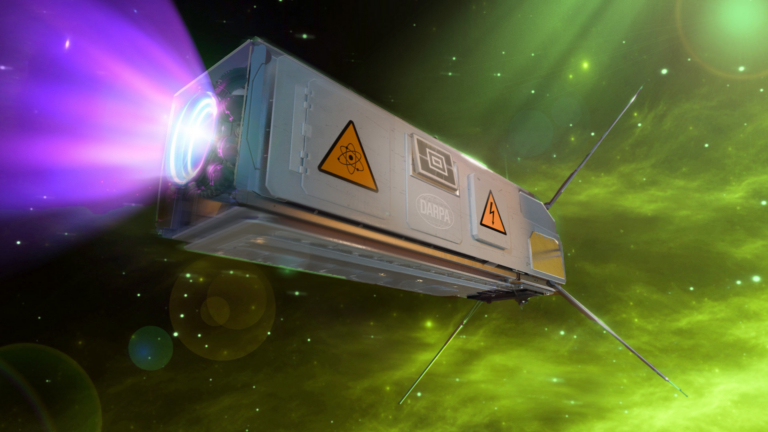
The dream of portable nuclear power, capable of fueling everything from pacemakers to entire military bases for decades without a single recharge, is closer to reality than ever. A major new technological initiative aims to dismantle the primary roadblocks that have stalled this field for generations: excessive weight and residual heat.
Goodbye, Cooling Systems: Power Extracted Directly from Radiation
Until now, thermal management has been the „Achilles’ heel” of transportable nuclear energy. Traditional reactors and radioisotope generators produce immense heat, requiring massive cooling systems that make true portability impossible.
The proposed solution radically changes the rules of the game through radiovoltaics. Unlike conventional systems, this technology converts radiation directly into electricity without going through a heat-generation stage. The process is similar to solar panels: while photovoltaic cells capture photons, radiovoltaic cells capture radioactive particles within a semiconductor to create an electric current. The result? An ultra-compact power source capable of operating for 30 years in extreme environments, from the freezing vacuum of space to the scorching temperatures of tactical zones.
The Materials War: AI Searches for the Perfect „Shield”
The greatest challenge remains durability. High-energy particles, while providing more power, tend to destroy the very semiconductor meant to capture them—a phenomenon experts describe as similar to destroying a wall by hitting it with cannonballs instead of ping-pong balls.
To overcome this barrier of physics, several elite teams are in a race against time:
- Some groups are betting on conservative approaches, using tamer radiation sources like tritium, optimized through advanced chemical engineering.
- Other teams are utilizing Artificial Intelligence to simulate billions of crystal structures, searching for new semiconductor materials capable of withstanding intense bombardment by alpha particles.
- An innovative approach proposes using a „shield” of liquid metal to absorb the impact of particles before they reach the semiconductor, thereby protecting the device’s integrity.
From Computer Chips to Military Bases
The ultimate objective is ambitious: replacing AA batteries with units that last a lifetime. Miniature versions could be integrated directly onto computer chips, while larger variants could render noisy diesel generators and complicated fuel logistics obsolete in conflict zones.
Initial prototypes have already demonstrated efficiency levels two to three times higher than current space nuclear technologies. A critical nine-month endurance test phase follows, which will determine which of these designs will move into mass production, promising unprecedented energy autonomy for the military and civilian applications of the future.