Civilian positions are eliminated, but the service says CASI’s mission will continue
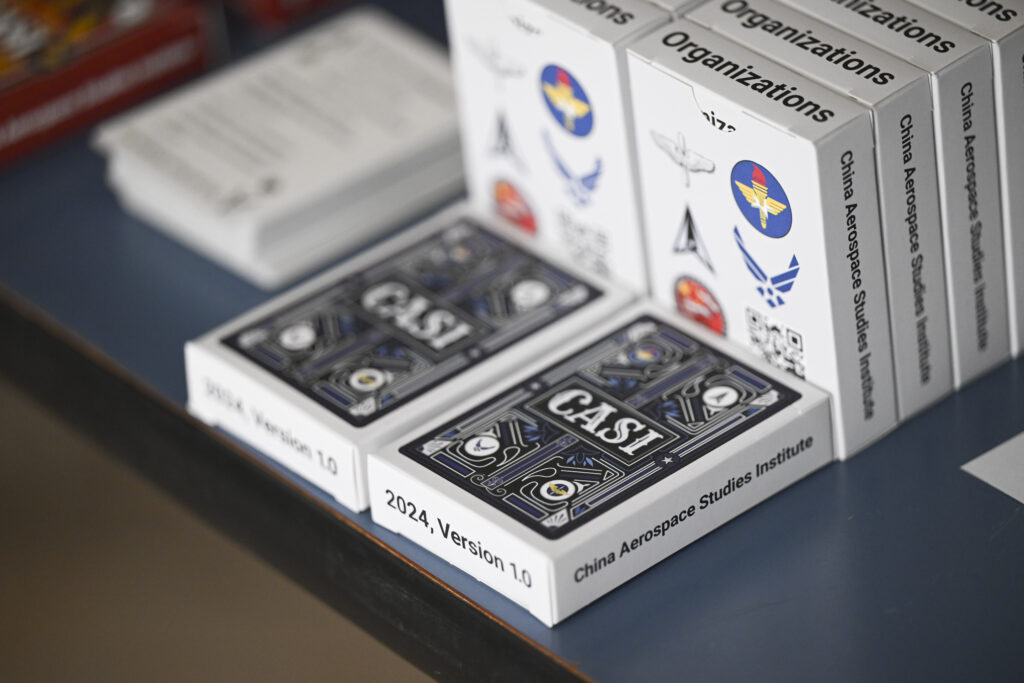
WASHINGTON — The U.S. Air Force is eliminating civilian positions at the China Aerospace Studies Institute, an organization dedicated to analyzing China’s air and space forces, but says it is not shutting down the research institute.
According to an Air Force spokesperson, the move is part of an ongoing civilian restructuring within Air Education and Training Command. Civilian employees will no longer be assigned to CASI, while the institute’s mission will be carried out by military personnel assigned to meet its objectives.
The affected civilian employees will remain in their current positions until further notice and will be evaluated for possible reassignment.
CASI account later contradicted the Air Force’s position
After the story was published, CASI’s official account on X stated that Air University had decided to close the China Aerospace Studies Institute.
That claim contradicted the Air Force’s earlier position that the institute would remain active and continue its mission with the support of military personnel.
The Air Force is expected to provide further clarification regarding the organization’s status.
CASI examines China’s military capabilities
CASI is a government-run research institute that regularly publishes studies on Beijing’s air and space forces.
Its findings are shared within the U.S. military and the broader defense community to improve understanding of China’s military capabilities and to help shape American policy and strategy.
The institute’s most recent paper, published Monday, was titled From Vision to Vigilance: How Beijing’s Space-Science Roadmap Builds a Real-Time Kill Web. The study examines how technologies ostensibly developed for space exploration could enable persistent, multispectral surveillance of the Pacific with near-real-time updates.
Such capabilities could also be used for military purposes to support what defense officials describe as a “kill web” — an integrated network of sensors capable of tracking and engaging a target through multiple means.
Developments come amid Xi Jinping’s planned U.S. visit
The situation at CASI first became public Monday, when a civilian staff member posted online about the elimination of several positions and claimed that the Air Force planned to close the institute.
The move attracted particular attention because it came during the week Chinese President Xi Jinping was scheduled to visit the United States. It also prompted questions about the future of similar China-focused research organizations operated by the U.S. Army and Navy.
The Naval War College told Breaking Defense that it did not anticipate any changes to the staffing or capacity of its China Maritime Studies Institute.
Army University did not respond to a request for comment regarding the status of the China Landpower Studies Center, which is operated by the U.S. Army War College.
Part of a broader restructuring effort
The changes at CASI mirror measures promoted last year during the height of the Department of Government Efficiency initiative.
An analysis by Breaking Defense and the American Enterprise Institute found that tens of thousands of civilian positions had been eliminated across the Department of Defense.
The cuts were later followed by operational challenges and the Air Force’s need to recruit thousands of new employees, according to Air & Space Forces Magazine.
It remains unclear whether shifting CASI toward a structure staffed primarily by military personnel will affect the pace, independence or scope of its research into China’s military capabilities.