The rising challenges posed by China and Russia in the Arctic have sparked concerns regarding the U.S. Army’s preparedness to operate in this extreme environment, characterized by difficult terrain, rapidly changing weather conditions, and temperatures plummeting to minus 60 degrees Fahrenheit.
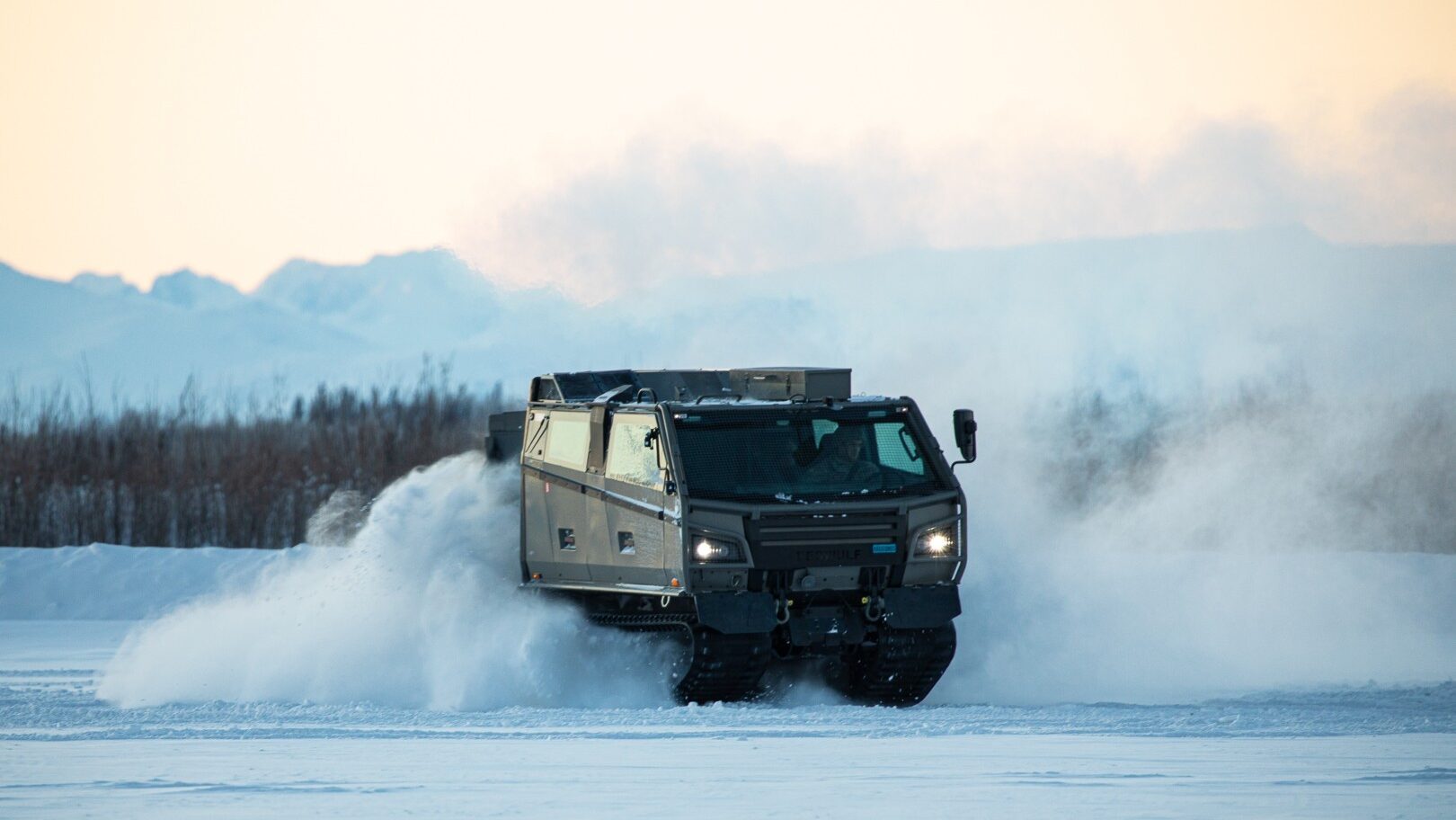
In many areas, snow limits off-road vehicle access, and the harsh cold can freeze essential equipment like sensors, fuel, batteries, and hydraulics. In the warmer months, the thaw brings saturated bogs that can significantly slow down vehicle movement. To address these challenges, Army officials stated that enhancing mobility capabilities is crucial for successful operations in the Arctic.
Sally Shoop, a former senior research engineer with the U.S. Army Corps of Engineers’ Cold Regions Research and Engineering Laboratory (CRREL), emphasized the need for mobility advancements: “If the U.S. ground force truly aims to gain Arctic dominance, mobility advancements to outmaneuver the enemy and reliably sustain the force is key,” she explained during the 16th Annual Ground Vehicle Systems Engineering & Technology Symposium held in Novi, Michigan.
To meet these operational demands, the Army has been actively conducting various research and development (R&D) and procurement programs focused on performance in extreme conditions. The CRREL undertakes interdisciplinary projects aimed at solving challenges faced by the Army Corps of Engineers, applying scientific and engineering principles to complex environments across all seasons.
Simultaneously, the Army Combat Capabilities Development Ground Vehicle Systems Center (DEVCOM GVSC) has been assessing new procedures and materials aimed at reducing the weight of structures and enhancing the durability of ground platforms in extreme climates ranging from arctic to desert conditions.
Robert Hart, a technical specialist in composite materials for DEVCOM GVSC, pointed out, “We might receive materials from vendors that claim excellent properties, but when asking how they will perform in the Arctic, we often lack testing data to support their performance in such environments.”
In terms of procurement, the Army awarded BAE Systems a $278 million production contract under the Cold Weather All-Terrain Vehicles (CATV) initiative in 2022, aimed at supplying up to 110 BvS10 Beowulf vehicles, along with spare parts and logistics support over five years. The first platforms were delivered in July 2023 and are expected to serve in operations related to emergency medical evacuations, general cargo transport, and command and control capabilities.
These initiatives align with the Pentagon’s 2024 Arctic Strategy, released in July, which outlines steps to enhance the military’s cold-weather inventory and improve C5ISR capabilities, including early warning, tracking, sensing, forecasting, and information-sharing. The strategy emphasizes the Arctic’s importance for homeland defense and its integral role in executing Indo-Pacific operations.
The 2024 Arctic Strategy also highlights the increasing cooperation between Russia and China, which poses a potential threat to Arctic stability. In line with its collaboration with Beijing, Moscow revised its Arctic policy in 2023 to prioritize its national interests in the region, focusing on rebuilding military bases and refurbishing Soviet-era installations.
Meanwhile, China has integrated the Arctic into its long-term strategic planning, seeking to expand its activities in the region without actual territorial claims, further complicating the balance of power in this critical area.