Institute selected as lead weapons systems integrator
The US Army has awarded the Georgia Tech Research Institute up to $33.4 million to serve as the lead weapons systems integrator for the Common Autonomous Multidomain Launcher, or CAML, prototype program.
The institute will support systems engineering, interface integration, modeling and simulation, as well as integrated testing of the prototype and its components.
The performance period for the award is expected to last 36 months.
CAML designed to replace the Typhon launcher
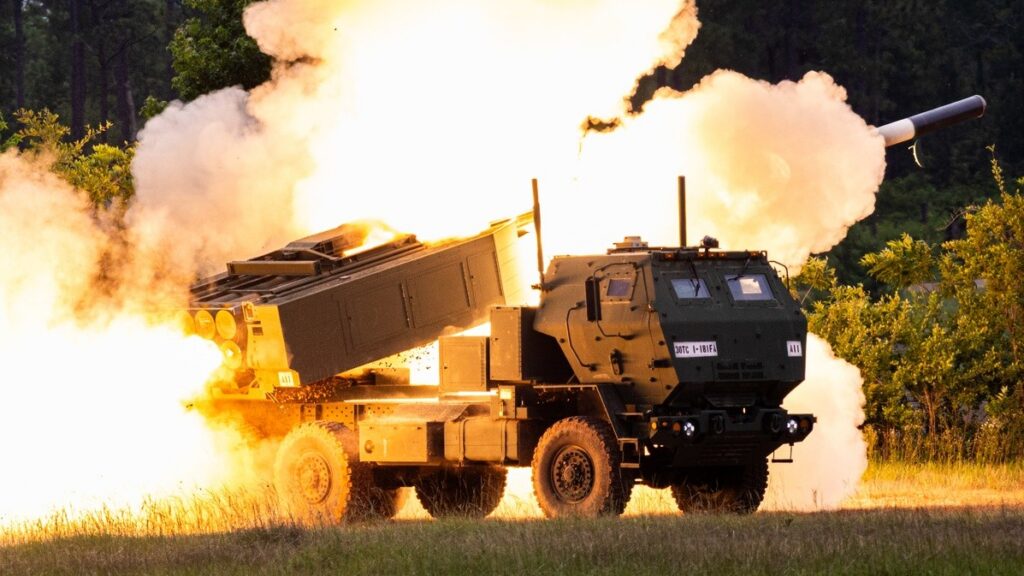
The CAML program is intended to replace the Army’s Typhon system, its long-range launcher developed under the Mid-Range Capability program. The service determined that Typhon was too large to operate effectively on the battlefield.
The new system is being designed as an autonomous, optionally crewed and highly mobile cross-domain fires launcher. It must also be air transportable, allowing it to be moved quickly between operational areas.
The program aims to provide ground forces with a flexible, adaptable and rapidly deployable fires capability.
Army moves away from a single-contractor model
Rather than selecting one contractor to deliver a complete system, the Army is pursuing a modular acquisition strategy.
Georgia Tech Research Institute will lead the integration of the autonomous mobility platform and modular munitions pallets—the key components of the future launcher. Awards for the individual components are expected to be announced in the coming months.
The approach is designed to allow the Army to select the strongest suppliers for each technological area instead of requiring one company to manage capabilities outside its core expertise.
A “team of teams” approach to launcher development
Army officials have described the new acquisition model as a “team of teams” approach.
The structure would bring together a weapons systems integrator, a munitions-pallet provider and an autonomous-platform supplier. Each partner would focus on its area of expertise, while the integrator would ensure that all components function together.
Officials have compared the architecture to a Lego-like system in which individual elements can be combined, replaced or upgraded without redesigning the entire launcher.
Before the acquisition strategy was revised, the Army had considered selecting separate vendors for medium and heavy CAML variants. With the new modular structure, it remains unclear how that division will ultimately be implemented.
Industry day scheduled to clarify procurement plans
The Army has announced plans to hold an industry day on September 2 to provide additional details on how it intends to acquire the CAML system.
The meeting follows concerns that multiple solicitations and procurement notices have caused confusion among industry participants.
Through the event, Army officials intend to clarify expectations, define the roles of prospective suppliers and encourage continued industry participation in the program.
Focus on rapidly expanding fires capabilities
Lieutenant General Frank Lozano, the Army’s Portfolio Acquisition Executive for Fires, said the service is moving urgently to deliver adaptable, survivable and scalable fires capabilities to soldiers.
The CAML program is expected to support rapid experimentation with modular launcher concepts, faster evaluation of performance and procurement decisions better aligned with operational requirements.