










Members of the House Select Committee on China are pressing the US Air Force to clarify plans to reduce staffing at an institute that studies Beijing’s military and aerospace strategy. The lawmakers warn that a decline in the institute’s work could affect US national security.
Lawmakers warn of lost expertise
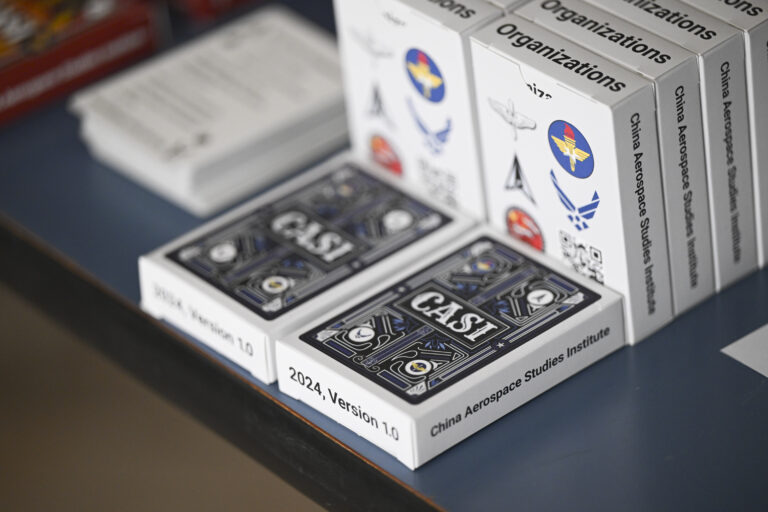
In a letter to Air Force Secretary Troy Meink, committee Chairman John Moolenaar, a Republican, and Ranking Member Ro Khanna, a Democrat, requested a briefing by November 20 on staffing and resource decisions affecting the China Aerospace Studies Institute (CASI).
The lawmakers argue that inadequate funding and staffing could weaken military leaders’ and civilian policymakers’ ability to understand China’s aerospace strategy and military capabilities. They say any loss of the institute’s expertise is especially concerning amid China’s expanding aerospace capabilities and its activities in the Indo-Pacific.
Replacing CASI’s in-house expertise with external support, the letter says, could require the Air Force and other government agencies to spend substantial sums contracting outside specialists.
Taiwan adds to deterrence concerns
The committee members warn that reducing analysis of the Chinese People’s Liberation Army’s air and space capabilities could affect US deterrence. Their concerns are heightened by the prospect of a potential conflict over Taiwan.
“As the PLA continues to expand its aerospace capabilities, our need to understand these advancements will continue to grow,” the letter states.
An Air Force spokesperson said the service would respond directly to the committee.
Civilian staffing plan fuels dispute
In September, reports emerged that the Air Force planned to eliminate CASI’s 10 civilian positions. The service said the institute would remain open and operate with military personnel. Its director, Brendan Mulvaney, has warned, however, that losing the civilian workforce would effectively shut the institute down.
The civilian positions are being moved to an unfunded status. Staff members are expected to continue working until reassigned elsewhere within the Department of the Air Force, but their posts cannot be filled once they leave. CASI’s current commitments are expected to continue largely as usual until around March; its longer-term future remains uncertain.
Research draws on open sources
Founded by Mulvaney roughly a decade ago, CASI publishes research on Beijing’s air and space forces, including analysis based on Mandarin-language material translated from open sources. The institute also provides training intended to help the broader defense and policy community understand China’s aerospace power.
Mulvaney has previously argued that the institute’s research and translation work cannot credibly be replicated without civilian experts.
The planned cuts have also prompted questions about similar programs run by the Army, Navy and Marine Corps. Representatives of those services previously said they had no planned changes to their respective China-focused initiatives.