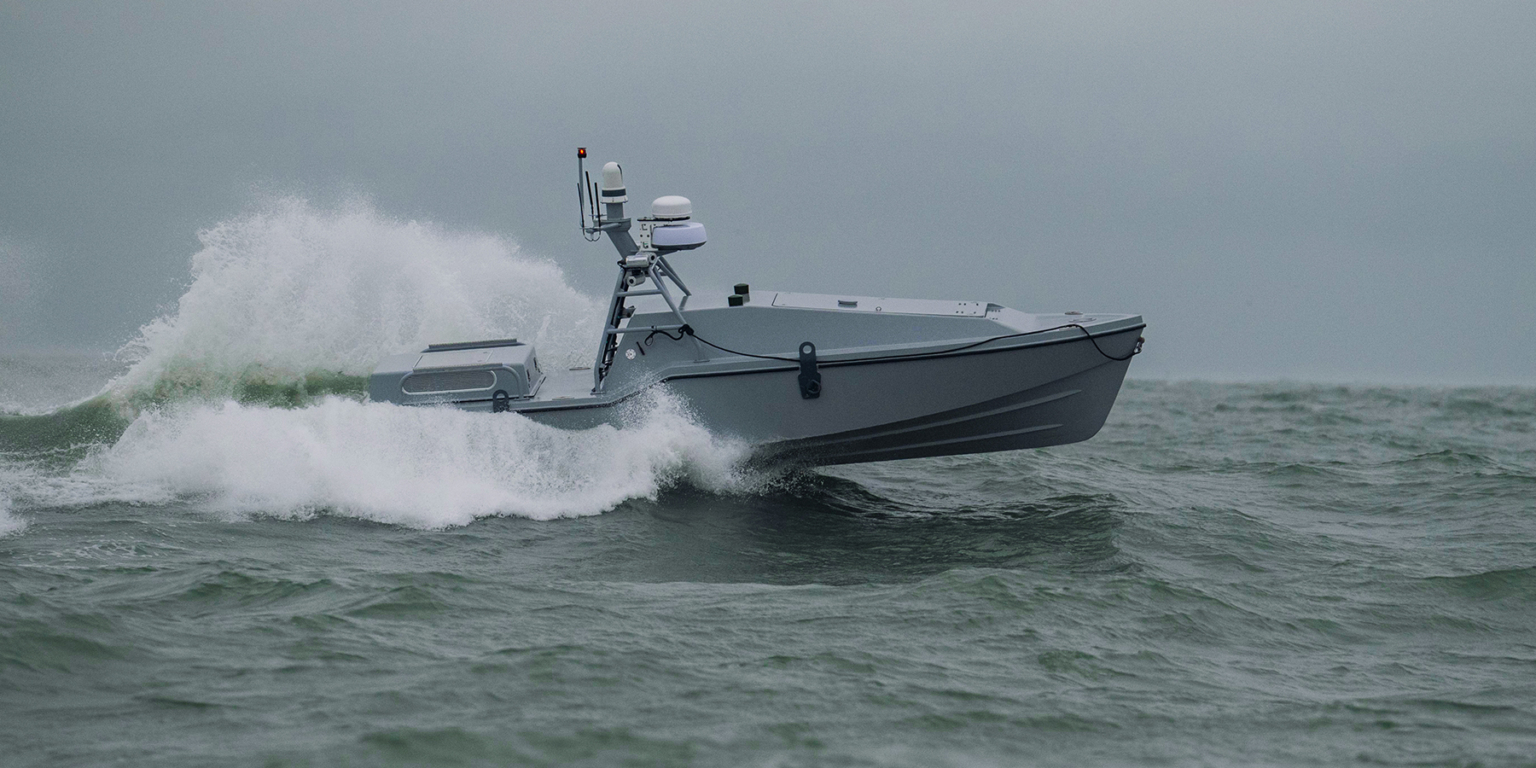
In a move that marks a fundamental shift in the conduct of naval warfare, US forces have used unmanned surface vessels (USVs) in combat operations for the first time. The strike targeted a submarine and ship maintenance facility in Iran, confirming the dawn of a new era in asymmetric conflict. US Central Command (CENTCOM) reported that three Corsair autonomous vessels hit the port of the Bandar Abbas naval base, degrading Tehran’s capability to continue attacking commercial shipping.
The combat debut of Corsair vessels signals a major shift in Middle Eastern naval strategy
Declassified footage shows the surgical precision of these new combat platforms. The sea drones were captured individually approaching port infrastructure, with one directly targeting a small submersible docked at the pier. The moment of impact was followed by successive explosions, demonstrating the effectiveness of these systems which, until recently, were used only in rescue missions or monitoring exercises. The deployment of Corsair vessels on the front line represents a turning point, providing US forces with the ability to strike strategic targets without risking sailors’ lives.
The Trump administration ends the ceasefire and reinstates the Hormuz Strait blockade
This escalation comes immediately after President Donald Trump officially announced on social media that any ceasefire agreement with Iran is a thing of the past. Furthermore, the US administration has ordered the reinstatement of the naval blockade on Iranian ships in the Strait of Hormuz, a critical area for global energy transit. The air and naval offensive launched on Sunday underscores Washington’s determination to use autonomous technology to enforce new rules of engagement in the region.
Saronic technology redefines asymmetric warfare with long-range maritime drones
The Corsair vessels, developed by the company Saronic, have demonstrated remarkable versatility, capable of carrying a payload of over 1,000 lbs across 1,000 nautical miles. While Ukraine was the first to utilize such „suicide drones” against the Russian fleet, the success of the American mission opens the door for mass production. The US Navy has already included Saronic in an extensive testing program, offering massive financial incentives and production contracts for firms that can deliver these lethal capabilities at an industrial scale.