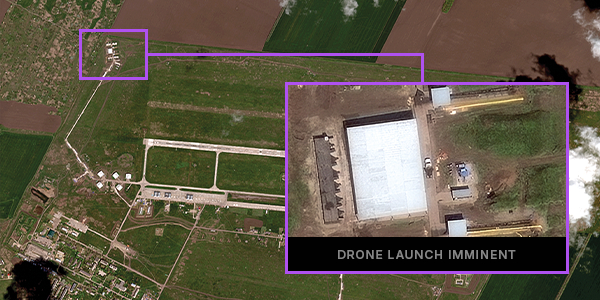
Europe stands at a defining moment for sovereign intelligence, where the ability to collect data is no longer sufficient without a real-time understanding of ground reality. Faced with external aggression, cyberattacks, or natural disasters, national resilience now depends on transforming space intelligence from a specialized capability into a central pillar of security. The current challenge is not a lack of sensors, but data fragmentation that prevents the formation of a coherent operational picture.
Beyond hardware: Why system control is the true key to sovereignty
Many national space strategies still focus exclusively on the sensor layer, operating on the premise that owning the satellite guarantees control over the outcome. However, modern intelligence is inherently multi-source, combining electro-optical imagery, radar (SAR) data, and drone feeds. If these inputs cannot be aligned quickly, commanders remain stuck analyzing disparate fragments. True sovereignty does not come from adding a new sensor, but from owning the infrastructure capable of turning multiple sources into a single, trusted tactical vision.
Lessons from the Ukrainian front: Integrating commercial technology for decisive reaction speed
The conflict in Ukraine has demonstrated how quickly commercial capabilities can be integrated into sovereign warfighting solutions when operational speed is the priority. Through the deployment of integrated space intelligence systems, frontline troops now have the ability to directly access high-resolution imagery to identify targets and coordinate drones with surgical precision. This model is essential for Europe: while building space hardware takes years, integrating existing solutions allows nations to adapt and act immediately.
Decision advantage: Digital infrastructure as the engine of modern command
European security requires a paradigm shift from asset-centric thinking to system-focused capabilities. The technology provided by Vantor offers the necessary foundation for this leap, allowing for the creation of a living model of the Earth where all data is aligned to a common reference point. The result is intelligence that moves at operational speed, connecting machines, systems, and operators to the same reality. Ultimately, the question is no longer who owns the most sensors, but who can most efficiently orchestrate the flow of information to gain a decision advantage.