Poor maintenance of the infrastructure of the health system, unprepared hospitals to deal with epidemic emergencies, widespread presence of villages where basic toilets and Roma ghettos are absent or in short supply , these are the main elements of the explosive combination that has transformed the Balkans into the health powder keg of the Old Continent. Like the rest of Europe, even the peninsula is not immune from China’s mask diplomacy, but the great protagonist of the aid war in the region is another, Turkey .
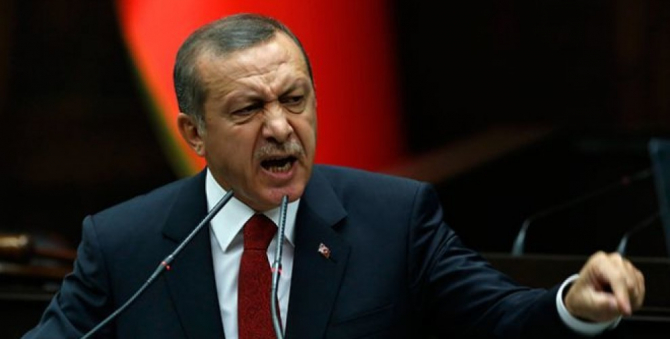
From Sofia to Sarajevo, no one is excluded. Serbia is the country most affected by Covid-19 in the Balkan region, together with Romania, with more than 2,600 cases and 65 deaths ; the son of the incumbent president, Aleksandar Vucic, was also recently hospitalized because of the virus. A state of emergency has been declared in the country, a curfew has been imposed, and after the rescue of Russia and China, security has also come from Turkey. Ankara initially limited aid to a load of diagnostic tests, but on April 6 Turkish President Recep Tayyip Erdoğan announced by letter to the Serbian counterpart that more substantial donations would soon arrive, wishing success in the fight against Covid-19 and expressing the condolences for the losses recorded.
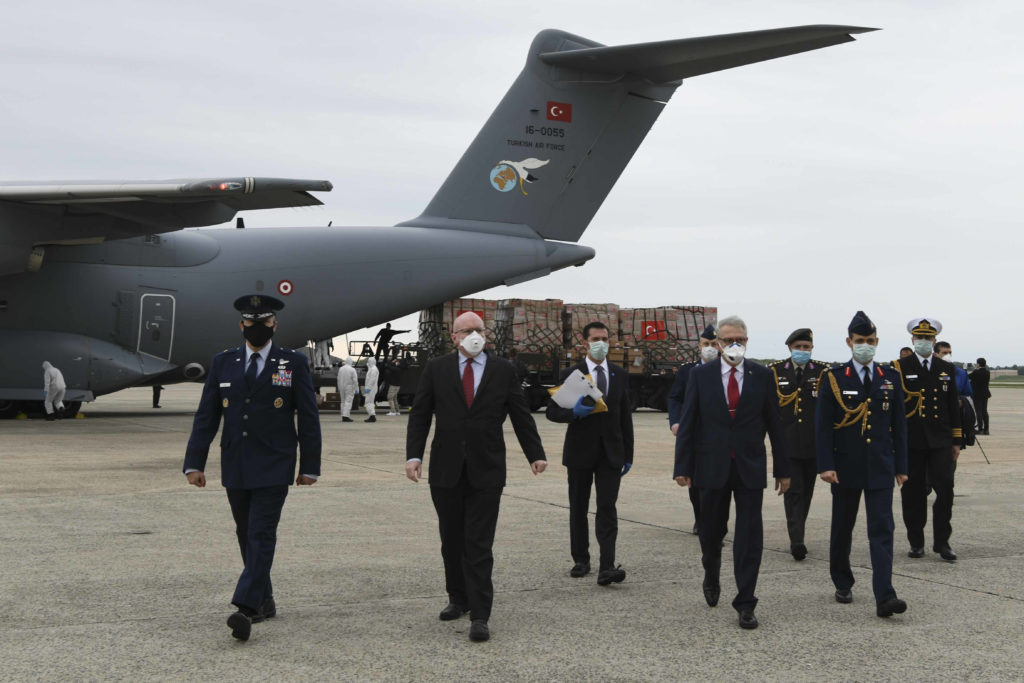
Two days after the letter, on Wednesday, the Turkish Ministry of Health finished the collection of protective masks, swabs and hospital equipment, and a military plane took off from Ankara to transfer the humanitarian cargo to Serbia, the first destination, and four other Balkan countries: Bosnia and Herzegovina, Montenegro, Kosovo and Northern Macedonia.
Belgrade, however it is, is the theater on which Ankara is focusing most. A substantial part of the Balkan cargo was, in fact, destined exclusively for Serbia: 100 thousand protective masks, 2 thousand protective suits, 1500 diagnostic tests. And against this background, the Turkish company Tasyapi has donated 25 beds for intensive care, five medical aspirators and one surgical, medical clothing and other hospital goods for patients and staff. Tasyapi is in the process of rewriting the Serbian road network and in 2018 it signed a $ 285 million agreement with the government for the construction of the Sarajevo-Belgrade highway.
Turkey is advancing, the EU is backing away
The load of aid for the Balkans has been particularly warmly received in Pristina and Skopje , where the Turkish presence has increased considerably in recent years, but the words of the Serbian defense minister, Aleksandar Vulin were also very significant : ” In a difficult time like this, we are also building our future. Serbia will always remember those who helped her. ” The Daily Sabah newspaper has rightly given prominence to the aid campaign set in motion to help the Balkan neighborhood but also to the discontent expressed by the political classes of the aforementioned countries by representatives of the Serbian, Macedonian and Kosovar governments.
As a result of the Eastern Mediterranean: A microcosm of regional and global battles for building up tensions around the Estern Mediterranean Zone, to including the new gas deposits with direct access of Greece, Ciprus and Israel.
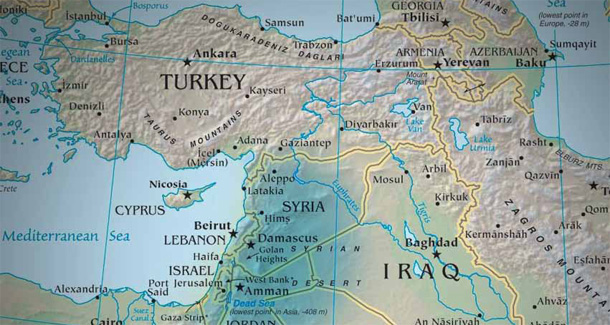
Additional straight interests of Saudi Arabia, Russia and Turkey are incetconnected as well.
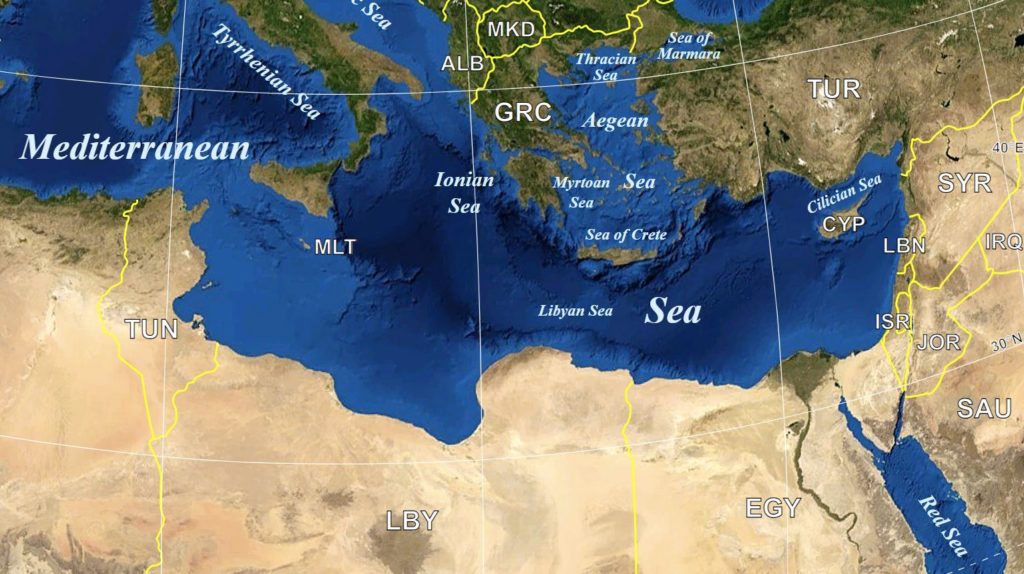
New local economic ambitions of Israel as leveraging such extended area security pivotal operational revised role.
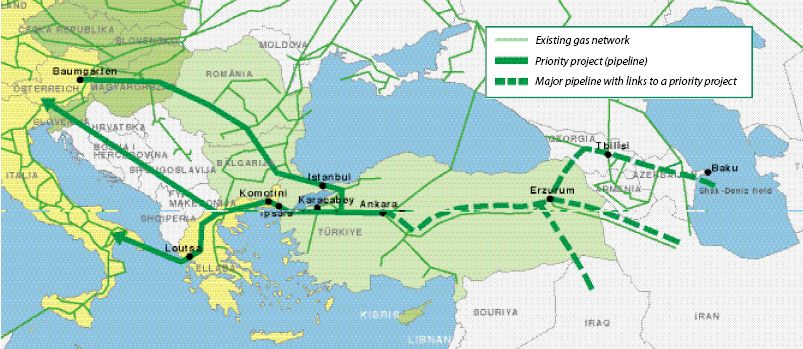
The daily & Day Light Players are marking their new lines’ teritorries.
The Eastern Mediterranean has become a flash-point for the meshing of geopolitics, the struggle for regional hegemony, battles for control of resources, religious soft power rivalry, and blatant interference in the politics of others.
The complex and dangerous juxtaposition of multiple conflicting interests broadens the focus beyond Russia, when it comes to meddling in elections, to include countries like Turkey, the UAE, and Saudi Arabia. It blurs the lines between multiple conflicts such as the wars in Syria and Libya and the struggle for control of the Eastern Mediterranean’s newly found gas deposits. And it positions contested waters as the latest venue in which Russia and the West battle for influence.
Laying bare the multiple disputes being fought on the back of the Eastern Mediterranean with its natural gas reserves of 122 trillion cubic feet resembles peeling an onion.
Lining up on opposing sides are Middle Eastern, North African, and Eastern Mediterranean nations, Gulf states, Turkey, Russia, and Europe.
Perhaps, most fundamental is the degree to which Europe going forward will be able to reduce its dependence on Russian gas imports. Russia currently satisfies approximately 40 percent of the European Union’s gas needs.
The ability to reduce Russian imports with gas from the Eastern Mediterranean potentially would allow Europe to adopt a more forceful stand in the struggle between Western liberalism and Russian civilisationalism that is likely to shape a new world order.
EU dependence has so far prompted European nations to temper their defense of Western values against Russian President Vladimir Putin’s civilizationalist* policies that include territory grabs in the Caucasus and Ukraine, intimidation of Central Asian nations, and support for Western far-right, neo-Nazi, and anti-immigration forces designed to weaken liberal democracy and strengthen groups more empathetic to the Russian leader’s worldview.
“The bad news is that the Moscow-Washington confrontation will continue; the good news is that there will be some guardrails built around it. . . .The Eastern Mediterranean, however, is emerging as an area where Russia, again, is competing with the West,” said Dmitri Trenin, head of the Carnegie Moscow Center.
Mr. Trenin argued that it was the Eastern Mediterranean rather than Ukraine, Crimea, the Baltics, the Arctic, or south-eastern Europe where tension could flare the most.
If for some nations like Greece, Cyprus, and Lebanon the struggle to control the Eastern Mediterranean’s resources is primarily about economics, for others, including Egypt and Israel it’s about projecting power. That is no truer than for Russia and Turkey, even if their interests against the backdrop of recently diverging positions on the battlefields of Libya and Syria, may differ rather than converge.
Turkey raised the stakes with its military backing of Libya’s internationally recognized Tripoli-based Government of National Accord (GNA) against United Arab Emirates, Saudi, Egyptian, and Russian-backed rebel leader Khalifa Haftar and his Libyan National Army (LNA).
A GNA-Turkish maritime agreement that created an Exclusive Economic Zone (EEZ) in the Eastern Mediterranean favoring expansive Turkish claims and the building of relations between Khalifa Haftar and Syrian President Bashar al-Assad link the war in Syria to the Eastern Mediterranean and the fighting in Libya. All at a time when Turkey and Russia maneuver to avoid a direct military clash in Idlib, the last stronghold of the Turkish-backed Free Syrian Army (SNA) rebels against Russian-backed Syrian government forces.
The economic zone, or EEZ, would block a planned pipeline that would link the EU to Israeli and Cypriot gas supplies.
If successfully enforced, the zone, coupled with Turkey’s military performance in Syria with the downing of three Syrian warplanes in as many days, would signal to regional hegemonic hopefuls, namely Saudi Arabia and the UAE, that financial muscle may not be enough to impose their will.
Ironically, one key to accommodation that could have reduced the risk of the ideological and geopolitical fuse blowing up and may have contributed to creating an environment of cooperation rather than confrontation lies on the divided island of Cyprus.
Turkey, beyond insisting that Turkish participation is a sine-qua-non for any successful exploitation of Eastern Mediterranean gas, has opposed a role for predominantly Greek-Cypriot Cyprus without the inclusion of the island’s self-declared independent Turkish Cypriot north.
Turkey, which has troops in the north ever since it invaded the island in 1974, is the only country to have recognized the region as an independent state.
The idea of including northern Cyprus may be a pie in the sky in an environment in which geopolitics is a zero-sum game with civilizationalists, nationalists, and autocrats leaving little space for power sharing. And Europe is too preoccupied with internal problems, and most recently with a new looming Syrian refugee crisis, to project a cohesive and inclusive policy approach.
Scholar and commentator Hussein Ibish cautioned that “all the elements that have compelled the parties to the eastern Mediterranean natural gas competition to develop local alliances that are increasingly melding with other strategic, diplomatic, and political contests appears likely to continue.”
Mr. Ibish blamed tension in the Eastern Mediterranean on the “strongly pro-Islamist orientation” of Turkey as “a budding would-be regional economic and political hegemon” rather than on multiple would-be hegemons.
Nonetheless, his conclusion stands that in the Eastern Mediterranean “disputes arising over narrow issues such as natural gas reserves will continue to take on far broader significance.”
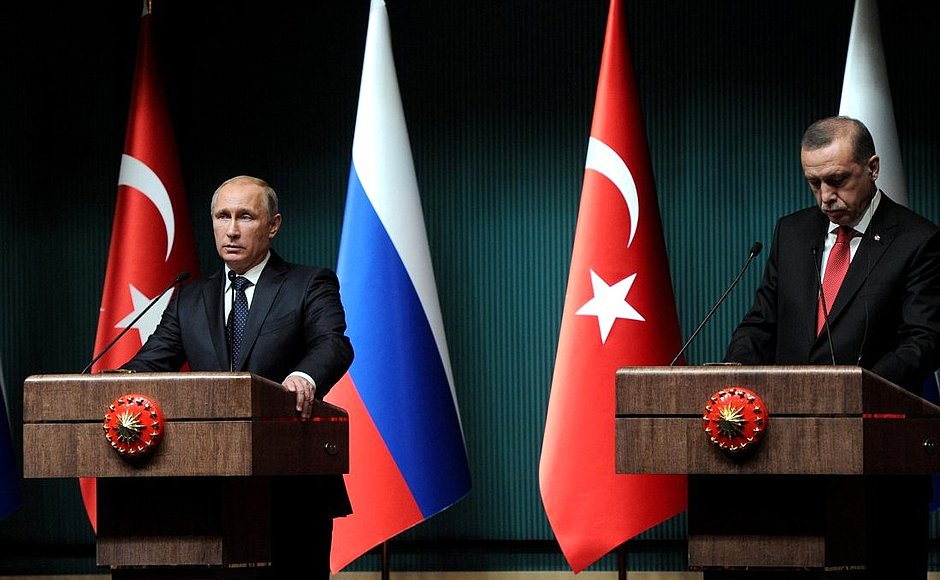
Source: Emanuel Pietrobon, James M. Dorsey: The COVID-19 crisis is helping Turkey to increase its influence in Europe |
NOTE: Turkey is one of the only routes energy from new sources can cross to Europe from the Middle East, Central Asia or the Caucasus. If Turkey — which has considerable influence in the Caucasus, Central Asia, Ukraine, the Middle East and the Balkans — is prepared to ally with the United States, Russia is on the defensive and German ties to Russia weaken considerably. If Turkey decides to cooperate with Russia instead, Russia retains the initiative and Germany is dependent on Russian energy. Since it became clear in Moscow that US strategy was to extend NATO to Russia’s front door via Ukraine and Georgia, Russia has moved to use its economic “carrot” its vast natural gas resources, to at the very least neutralize Western Europe, especially Germany, towards Russia. It is notable in that regard that the man chosen as Russia’s President in December 1999 had spent a significant part of his KGB career in Germany. (Daniel Niculae).
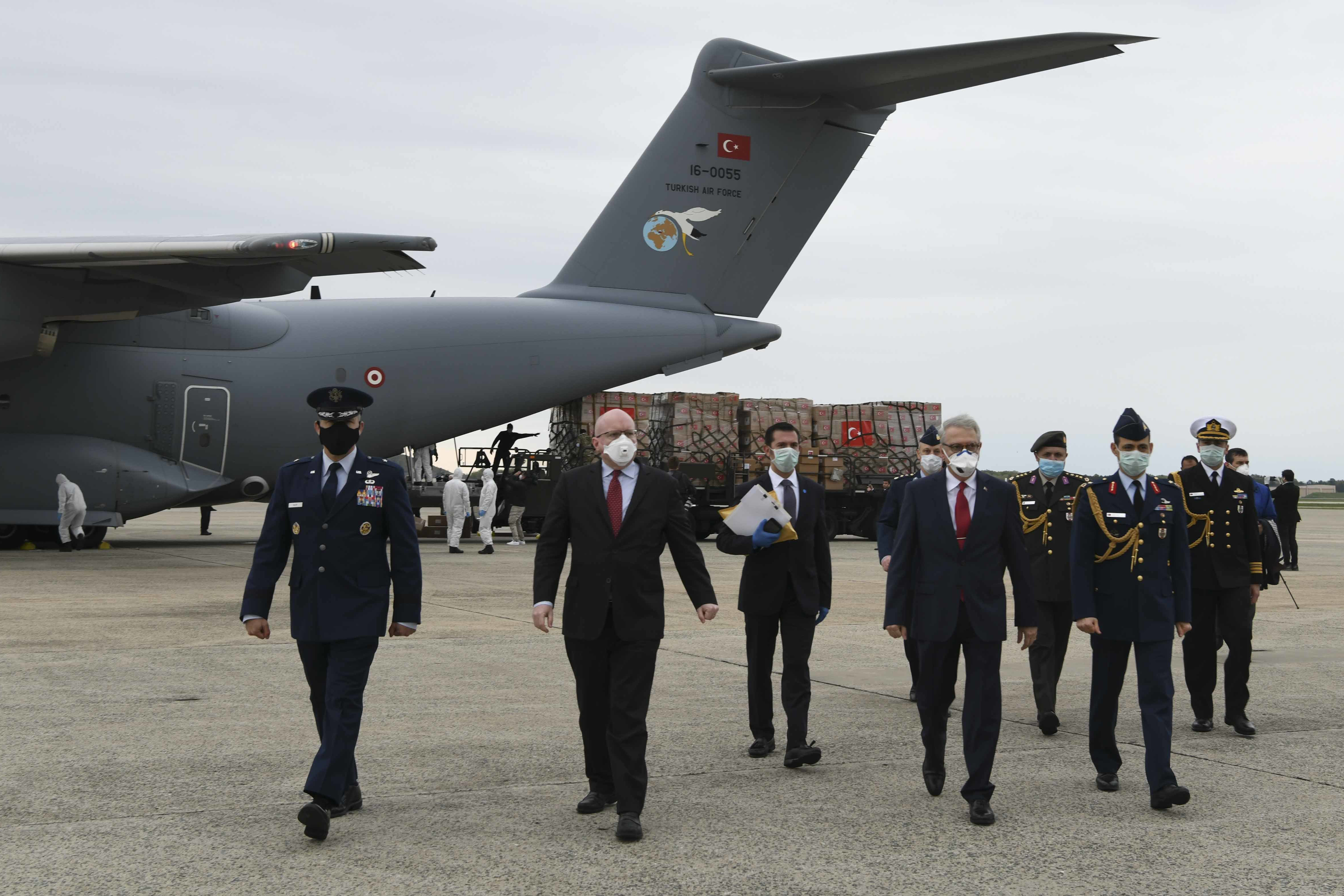
Pictures: Turkey’s donations to the United States and its example of leadership within NATO on the COVID-19 response — the allies helping allies | NATO policy. „Similar to Turkey’s support to Italy, Spain, the United Kingdom and the Balkans, Turkey’s donation to the United States employed NATO coordination mechanisms.”